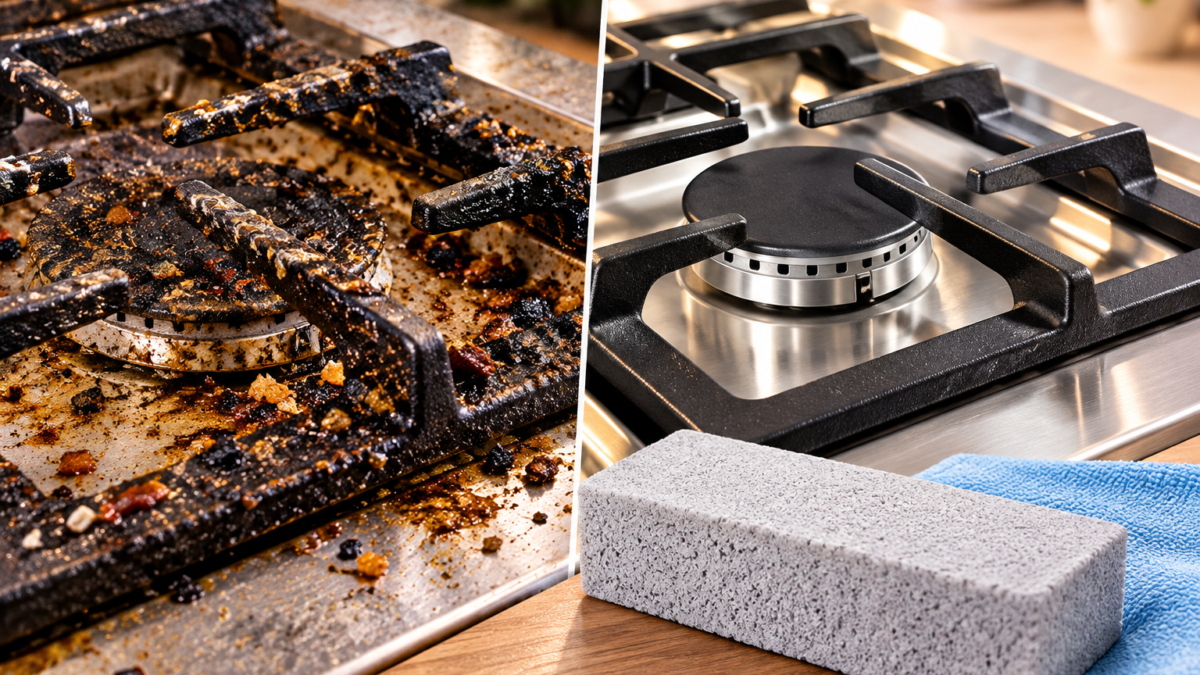
Burnt-on food, grease, and carbon buildup can make kitchen cleaning a frustrating task. Whether you’re maintaining a home stovetop or cleaning equipment in a busy commercial kitchen, stubborn residue often requires more than a quick wipe with a cloth and an all-purpose cleaner.
The good news is that with the right cleaning approach and tools, you can tackle tough buildup more effectively while protecting your kitchen surfaces.
Why Is Burnt-On Residue So Difficult to Remove?
Burnt-on residue forms when food particles, cooking oils, and grease are repeatedly exposed to heat. Over time, these materials can harden and cling to surfaces, creating dark, sticky, or crusty deposits.
Common areas where this buildup occurs include:
- Stove grates and burner caps
- Gas stovetops and cooktops
- Flat top grills and griddles
- Stainless-steel cooking surfaces
- Oven interiors and baking trays
- Kitchen equipment used for frequent frying or grilling
The longer residue remains on a surface, the more challenging it can become to remove. Regular cleaning helps prevent accumulation, but older deposits may require targeted treatment and additional scrubbing.
1. Identify the Surface Before Cleaning
Before choosing a cleaning method, determine what material you’re working with. Different kitchen surfaces have different cleaning requirements.
- Cast iron: Uncoated cast-iron grates may require careful cleaning and thorough drying to prevent rust. Follow the manufacturer’s maintenance recommendations.
- Stainless steel: Use cleaners and tools approved for the particular finish. Avoid abrasive materials that could scratch or dull the surface.
- Porcelain-coated grates: These surfaces can chip or scratch if cleaned with overly abrasive tools. Use methods recommended by the appliance manufacturer.
- Glass cooktops: Avoid pumice stones and abrasive scouring tools unless the manufacturer specifically approves them. Use a cleaner designed for glass cooktops.
Identifying the material first helps you choose an effective cleaning method without causing unnecessary damage.
2. Remove Loose Food Particles and Grease
Start by removing loose crumbs, food particles, and excess grease. If you’re cleaning a stovetop or grill, ensure the equipment is switched off and sufficiently cool before handling removable components, unless the manufacturer’s cleaning instructions specify otherwise.
Use a scraper or cleaning utensil appropriate for the surface to remove loose debris. For removable grates, consult the appliance manual to determine whether they can be soaked in warm water and dish soap.
This initial step makes it easier to focus on the hardened residue that remains.
3. Apply a Suitable Cleaning Solution
Choose a cleaner formulated for the surface and type of residue you’re addressing.
For ordinary grease and food spills, warm water and dish soap may be sufficient. More stubborn carbon deposits may require a specialised kitchen degreaser or another product approved for the equipment.
Follow the cleaner’s label directions for application, dwell time, temperature restrictions, and rinsing. Never mix cleaning chemicals, particularly bleach with ammonia or acidic products.
Allowing a suitable cleaner to work as directed can loosen residue and reduce the amount of physical scrubbing required.
4. Use the Right Tool for Stubborn Buildup
When residue remains after cleaning, the right tool can make a significant difference.
Depending on the surface, suitable options may include a non-scratch scrubbing pad, a manufacturer-approved scraper, or a specialised scouring tool. Avoid using the same abrasive tool on every kitchen surface.
For certain hard, compatible surfaces, a pumice cleaning stick can help address stubborn deposits that ordinary wiping may not remove.
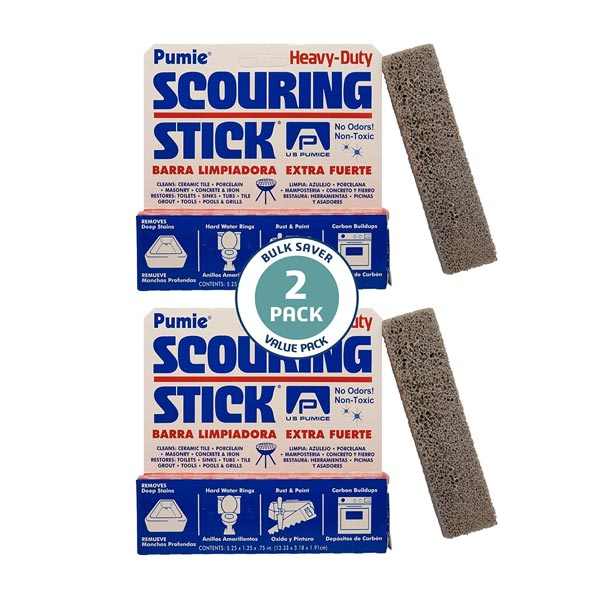
PUMIE Heavy Duty Scouring Sticks – 2 Bars
Heavy duty gray pumice cleaner – trusted by millions for over 75 years! PUMIE HDW original eco-friendly pumice stone scouring sticks are the best way to remove stubborn household grime – cleans what the strongest chemicals cannot! Easily remove toilet stains and mineral deposits from tubs, showers, sinks, toilets and plumbing. Removes rust and paint messes on…
The PUMIE Heavy Duty Scouring Stick is designed for tough cleaning jobs, including stubborn buildup and stains on appropriate surfaces.
Its pumice construction provides a targeted option for deposits that require mechanical cleaning. Before using it on stove grates or other kitchen equipment, verify that the specific surface is compatible with pumice and follow the product’s instructions.
Pumice can scratch or damage certain finishes, coatings, and softer materials. Do not assume it is suitable for every stovetop, grate, or cooking surface. When compatibility is uncertain, test only as directed by the manufacturer or choose a less abrasive method.
5. Scrub Carefully and Remove the Residue
Once you’ve selected a compatible cleaning method, work on the affected area using controlled movements.
Avoid applying excessive pressure, especially around coated or finished surfaces. If the residue does not loosen, stop and reassess the cleaning method rather than increasing the abrasion.
After cleaning, remove loosened debris and rinse or wipe the surface according to the cleaner’s instructions. If the equipment is used for food preparation, ensure the surface is properly rinsed and ready for use according to the manufacturer’s directions.
For removable grates, dry them thoroughly before reinstalling them if the manufacturer recommends doing so.
6. Prevent Burnt-On Residue from Returning
Preventive maintenance is usually easier than removing layers of hardened grease and carbon.
Here are several habits that can help:
- Clean spills promptly: Remove food and grease before repeated heating causes them to harden.
- Establish a cleaning schedule: Clean grates, burner caps, and cooking surfaces according to how frequently they’re used.
- Use suitable cleaners: Match cleaning products to the surface material and type of residue.
- Avoid excessive heat when possible: Follow appropriate cooking practices to reduce unnecessary charring and residue.
- Inspect overlooked areas: Pay attention to burner caps, grate corners, and the edges of cooking surfaces.
In commercial kitchens, consistent cleaning routines also help teams maintain equipment and reduce the workload associated with deep cleaning.
Make Tough Kitchen Cleaning More Manageable
Burnt-on residue can be difficult to remove, but the process becomes more manageable when you identify the surface, choose a suitable cleaner, and use the right cleaning tool.
For everyday grease, dish soap or an appropriate degreaser may be enough. For stubborn deposits, a specialised scouring tool may help, provided the surface can withstand its abrasiveness.
The PUMIE Scouring Stick offers an option for tough cleaning jobs on compatible surfaces. Used appropriately and according to its directions, it can be a useful addition to a cleaning toolkit for stubborn buildup.